
The Detail Most Wine Gift Sets Get Wrong
This guide explains how B2B buyers evaluate custom wine pourers for wineries, gift brands, and hospitality projects. It covers material choice, drip-free performance, aeration, branding, packaging, MOQ planning, and how to source a pourer that fits both service use and premium gift positioning.
Walk through any wine accessory section on Amazon — or browse the tasting room retail shelf at a boutique California winery — and you’ll notice a pattern. The stoppers get the attention. The glass charms get the display space. The wine pourer? It’s usually an afterthought: a generic chrome tube in a plain OPP bag, tucked in as filler.
That’s a mistake — and it’s one that costs brands real margin.
A custom metal wine pourer is the piece in any wine accessory set that gets used every single time a bottle is opened. Not just on special occasions. Every time. That means it sits on the table, it gets handed to guests, and it carries your brand logo directly into the moment the wine is served.
If your pourer looks generic, that moment works against you. If it looks premium — weighted, well-finished, with a clean pour and your brand’s identity cast into the metal — that moment does your marketing for you.
This guide is for buyers who want to get it right: Amazon FBA sellers building a differentiated wine gift set, winery gift directors planning a tasting room product line, and brand owners who want a branded wine pourer that actually holds up at retail.
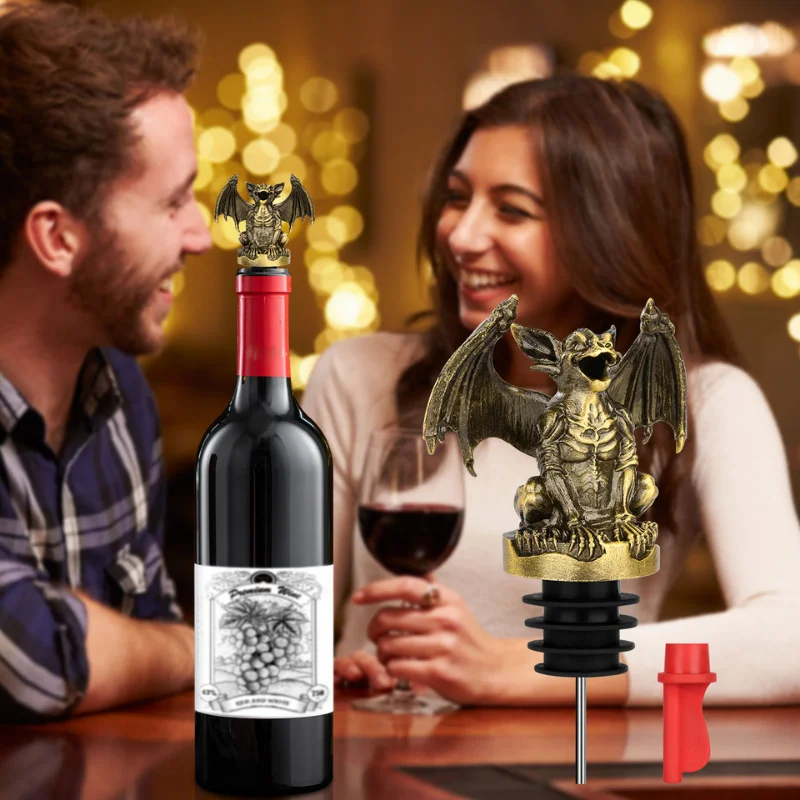
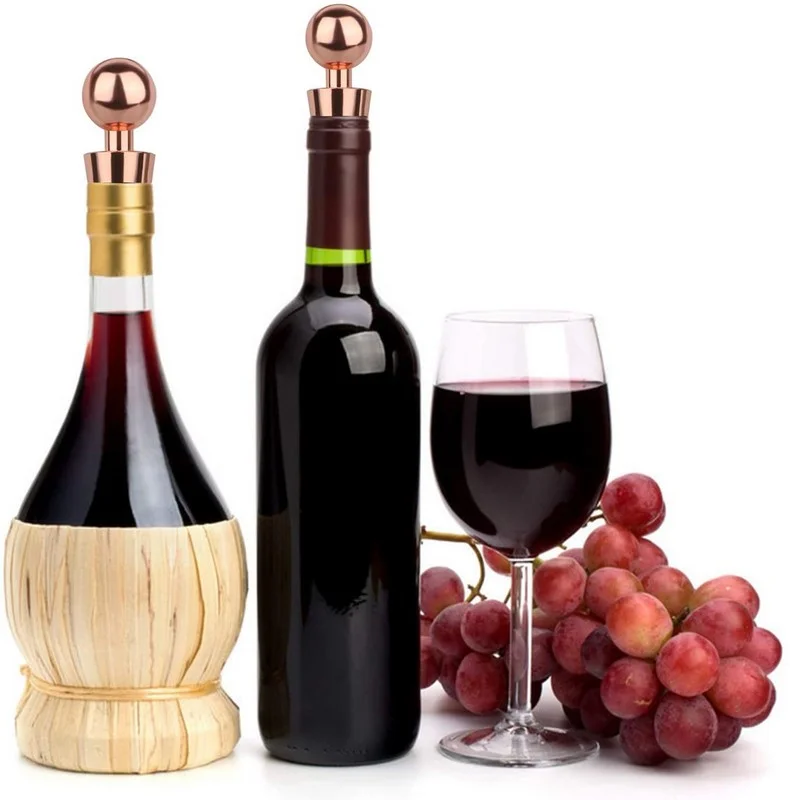
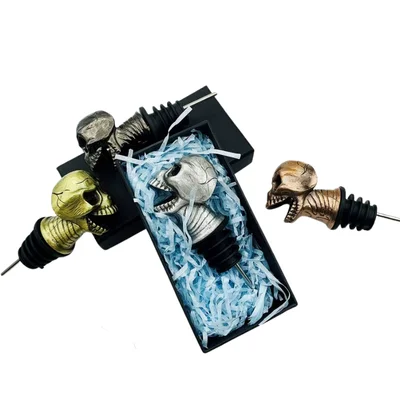
Wine Pourer vs. Aerator: What’s the Actual Difference?
Before you specify a product, it’s worth clarifying the terminology — because “wine pourer” and “wine aerator” are used interchangeably in many supplier catalogs, and they describe different functional priorities.
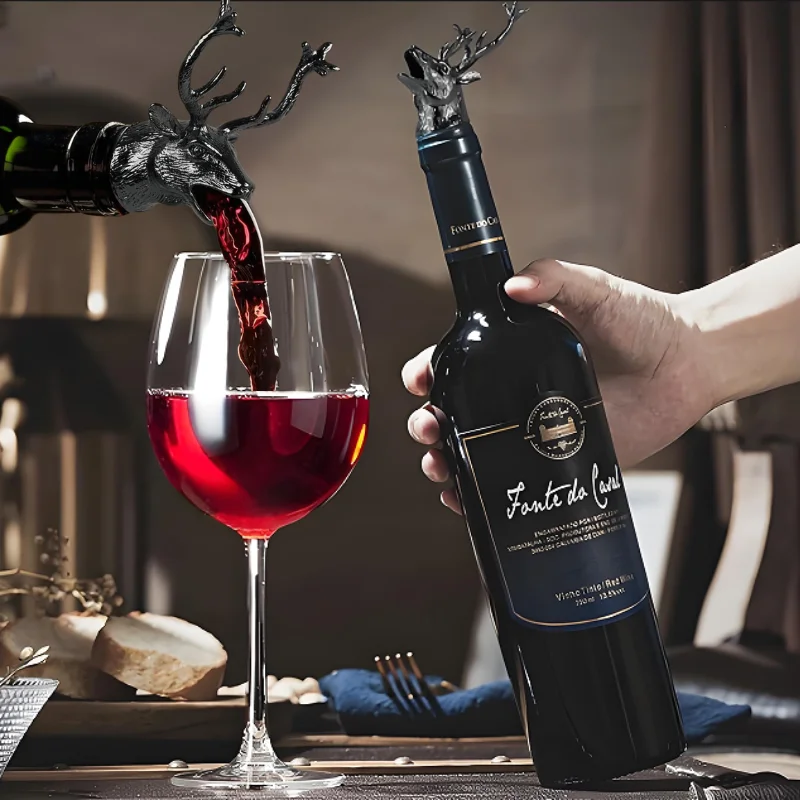
A wine pourer is primarily a flow control and anti-drip device. It fits into the bottle neck and redirects the wine into a smooth, controlled stream. The main functional benefit is a clean pour with no drips on the tablecloth — a feature that matters to restaurant operators, tasting room staff, and any consumer who has ever watched an expensive red run down the side of a bottle.
A wine aerator is designed to expose wine to oxygen during pouring, softening tannins and opening up the aroma profile faster than decanting alone. Aerators typically have a more complex internal structure — channels or screens that create turbulence in the wine stream.
A combined wine pourer-aerator does both: controls the pour and aerates simultaneously. This is the most commercially versatile format for branded gift sets because it offers a functional benefit that buyers can communicate on packaging — “aerates as you pour” is a claim that supports premium pricing.
For most B2B gift set applications — Amazon FBA bundles, winery tasting room kits, corporate gifting — a drip-free pourer with integrated aeration function is the right product specification. It’s functional enough to justify inclusion, visible enough to carry branding, and simple enough to manufacture at consistent quality.
Why Metal Beats Plastic for a Branded Wine Pourer
Most entry-level wine pourers in the wholesale market are made from plastic or thin stainless steel stampings. Both work. Neither communicates luxury.
The case for zinc alloy is the same here as it is across every wine accessory category: material density translates directly to perceived value. A zinc alloy pourer feels substantial. It has weight. When a guest picks it up off a tasting room counter, the tactile experience communicates quality before they’ve read a single word of packaging copy.
Beyond perception, there are practical advantages:
Surface finishing quality. Zinc alloy provides a smooth, dense casting surface that accepts electroplating cleanly — mirror polish, matte black, rose gold, antique bronze. Plastic can be painted; it cannot be plated. Thin steel stampings plate unevenly. Zinc alloy die-cast parts produce the consistent, high-quality surface finish that premium gift products require.
Logo reproduction. 3D relief logos — embossed or debossed — can be integrated directly into the die-casting mold. The result is a logo that is part of the metal, not applied on top of it. It won’t peel, fade, or scratch off. For brands that are building a product line with long-term value, this is the correct specification.
Durability. A zinc alloy pourer that goes through a commercial dishwasher in a restaurant setting, or gets knocked around in a tasting room drawer for three years, maintains its finish. Cheap plated plastic does not.
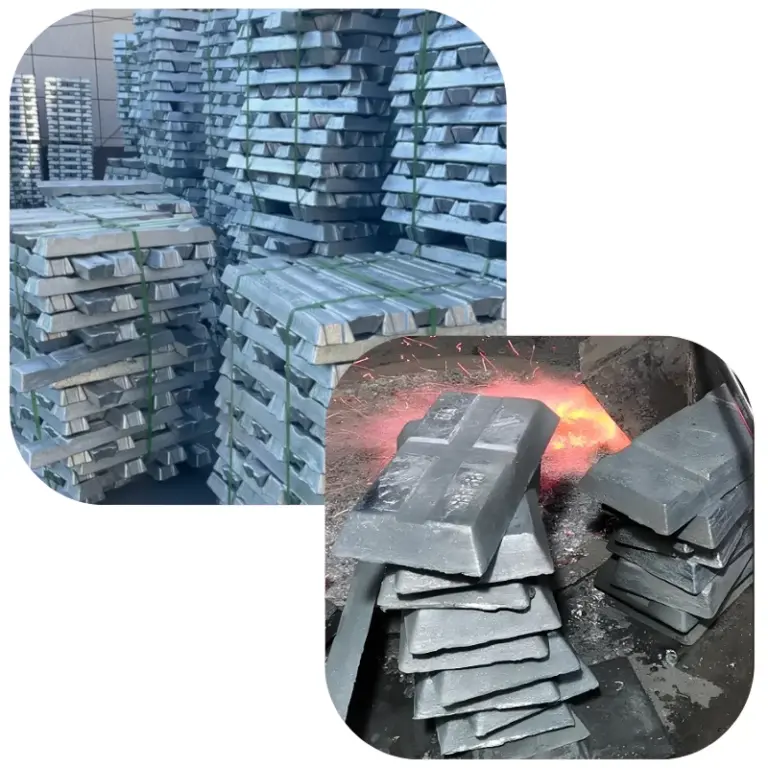
The one consideration with zinc alloy is compliance. Wine pourers make direct contact with wine during use. The inner tube — typically food-grade silicone or stainless steel — must meet food-contact safety standards. The outer zinc alloy body should be manufactured from primary alloy material (Zamak #3 is the industry standard) to ensure the final product passes FDA and LFGB requirements. This is not optional for buyers selling into the US or European markets.
Compliance: What FDA and LFGB Mean for Your Wine Pourer Order
If you are sourcing a custom wine pourer for sale in the United States or the European Union, food-contact compliance is a non-negotiable requirement — not a nice-to-have.
FDA (US market): The FDA regulates materials that come into contact with food and beverages. For a wine pourer, the relevant components are the inner tube or aeration channel that the wine flows through. Food-grade silicone inner tubes meet FDA standards. Third-party SGS testing documentation is the standard proof required.
LFGB (EU/Germany market): LFGB is the German Food and Feed Code, which sets some of the strictest food-contact material standards globally. EU buyers — particularly German distributors and UK retail buyers — routinely require LFGB test reports before approving a new product. If you are targeting European distribution, confirm LFGB compliance with your manufacturer before sampling.
What to request from your manufacturer:
- Third-party SGS or equivalent test report for the silicone seal/inner tube
- Declaration of material composition for the zinc alloy body (confirm primary alloy, no recycled scrap material)
- RoHS compliance statement (restricts hazardous substances including lead and cadmium)
The practical implication: when comparing manufacturer quotes, a lower price that comes without compliance documentation is not actually a lower price. The risk of a customs rejection, product recall, or Amazon listing removal is a cost that is not visible on the initial quote.
How to Customize a Wine Pourer: The Process from Sketch to Sample
Most buyers approaching custom wine pourer sourcing for the first time assume the design process is complicated. It is not — if you’re working with the right manufacturer.
Here is the standard development process:
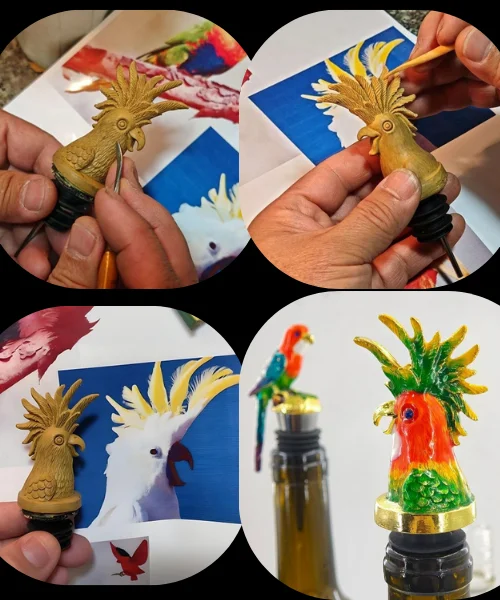
Step 1: Provide your starting point. This can be a vector logo file (.AI or .EPS), a reference photo, a hand sketch, or a description of what you want. You do not need a complete technical drawing. A factory with in-house 3D design capability will translate your input into a production-ready 3D rendering within 48 hours — at no charge.
Step 2: Confirm the 3D design. Review the 3D rendering and approve or request revisions. This is the stage to confirm logo placement, finish (matte/glossy/plated), and any structural modifications. Changes at this stage cost nothing. Changes after the mold is cut are expensive.
Step 3: Confirm the mold drawing and pay the tooling fee. Once the 3D design is approved, the factory generates a mold drawing and produces the steel mold. Tooling fees for a wine pourer mold are a one-time investment — the mold is yours, stored at the factory typically for five years at no charge.
Step 4: Receive and approve the physical sample. From confirmed mold drawing to physical sample: 8 to 10 business days. This is the stage to verify finish color against your approved swatch, test the pour function, and check logo sharpness. Most buyers request 2–3 samples.
Step 5: Approve for mass production. Once the sample is approved, mass production begins. Standard lead time for a batch of 300–1,000 units is 18 to 20 business days from approval.
Total timeline from first design contact to approved sample: approximately 2 to 3 weeks. For seasonal buying cycles — particularly Q4 Christmas gift sets — buyers should account for this timeline and initiate development at least 4 to 5 months before their required ship date.
Customization Options: What You Can Specify on a Metal Wine Pourer
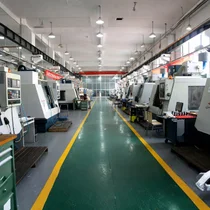
The advantage of working with a zinc alloy die-cast manufacturer is the breadth of customization available. Unlike injection-molded plastic or stamped metal, die-casting allows structural customization at the design level — not just surface decoration.
Logo and branding options:
- 3D relief logo integrated into the top cap (embossed or debossed)
- Laser engraving on the barrel
- Electroplating color contrast (e.g., gold logo on matte black background)
- Silk screen printing for flat logo applications
Finish and plating options:
- Matte black
- Shiny gold / rose gold
- Antique bronze / antique silver
- Chrome / mirror polish
- Custom color plating (confirm with color swatch before production)
Shape and form options:
- Standard barrel form with branded top cap
- Extended sculptural top (animal head, geometric form, custom 3D shape)
- Tapered or flared barrel for visual differentiation
Inner mechanism options:
- Food-grade silicone inner tube (standard, wine-direct contact)
- Stainless steel inner tube with silicone seal
- Integrated aerator screen for oxygenation function
Key principle: If you are ordering a branded wine pourer as part of a multi-product gift set, confirm that the plating finish on the pourer matches the finish on every other item in the set. “Gold” is not a universal standard — it varies by electroplating process. Source all items in a coordinated set from the same manufacturer to guarantee color consistency.
Where the Custom Metal Wine Pourer Fits in Your Product Line
Amazon FBA Wine Gift Sets
The “wine lover gifts” category on Amazon is a high-competition, high-volume space — particularly in Q4 (October through December) and around Mother’s Day and Valentine’s Day. Branded metal accessory bundles consistently outperform generic single-product listings in this category on the basis of perceived value, photography quality, and the ability to justify a higher price point.
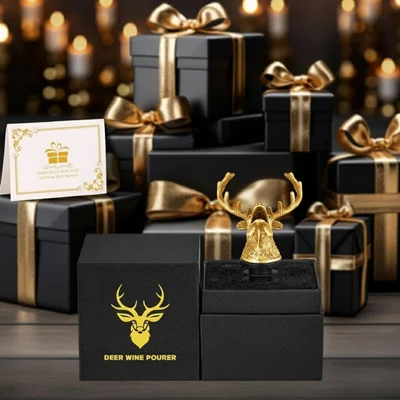
A wine pourer is the functional centerpiece of any multi-piece wine gift set. It answers the question “what does this set actually do?” in a way that decorative items like glass charms or wine labels cannot. Pair it with a branded stopper and a set of 4 glass charms, package it in a magnetic gift box with your logo on the lid, and you have a product that photographs well, ships well, and commands a retail price of $35–$65 versus $12–$18 for a single stopper.
For Amazon sellers, the additional advantage is the “Patented Seal” and FDA-compliant material claims that can go directly into listing bullet points — factual quality signals that are difficult for competitor resellers to replicate.
Winery Tasting Room Retail
For a winery, the tasting room retail shelf is one of the highest-margin revenue channels available. A custom metal wine pourer bearing the winery’s logo is a functional souvenir — it goes home with the customer, lives in their kitchen, and carries the winery brand into every bottle the customer opens for the next five years.
The value is not just in the initial sale. A high-quality branded accessory is a daily brand reminder that generic merchandise — a t-shirt or a tote bag — cannot match.
Boutique wineries in Napa Valley, Sonoma, Barossa Valley, and other premium wine regions regularly use custom metal accessories as the premium tier of their retail offering: a $60–$80 branded accessory gift set alongside the standard $30 wine purchase.
Corporate Gifting and Event Branding
Corporate wine gifting is a significant category with strong year-round demand — Q4 holiday gifting, client relationship maintenance, event giveaways, and sales team incentive programs. A branded metal wine pourer in a premium gift box is a high-perceived-value gift that is appropriate for a professional context in a way that consumable food items are not.
For corporate gifting buyers, the MOQ of 300 pieces per design is typically a low barrier — most corporate orders are larger than this. The key requirements are fast sampling for approval, consistent quality across the batch, and reliable delivery.
Q: What is the minimum order quantity for a custom metal wine pourer?
A : The standard MOQ is 300 pieces per design. This applies whether you are ordering a wine pourer alone or as part of a multi-product gift set.
Q : How long does it take to receive a sample?
A : From confirmed mold drawing, sample production takes 8 to 10 business days. If your design uses an existing mold template, the timeline can be shorter.
Q : Do I need my own design file, or can the factory help?
A : You do not need a complete technical drawing. A sketch, a reference image, or a description of what you want is sufficient. Free 3D design support from concept to production-ready file is included — typically delivered within 48 hours.
Q : Is a zinc alloy wine pourer food-safe?
A : Yes — when manufactured correctly. The wine-contact surfaces (inner silicone tube or stainless steel channel) must be food-grade and compliant with FDA or LFGB standards depending on your target market. Ask your manufacturer to provide third-party test documentation before confirming your order.
Q : Can I match the pourer finish to other accessories in my gift set?
A : Yes. Sourcing all items in a coordinated set from the same manufacturer — using the same electroplating bath and color standards — is the recommended approach for consistent finish across a multi-product set.
Q : What plating finishes are available?
A : Standard options include matte black, shiny gold, rose gold, antique bronze, antique silver, and chrome. Custom plating colors are available with a confirmed swatch reference.
Q : Can I add a 3D shape to the top of the pourer, not just a flat logo?
A : Yes. 3D sculptural tops — animal heads, geometric forms, custom shapes — can be integrated into the die-casting mold. This is the same process used for custom wine stoppers and is one of the core manufacturing capabilities of zinc alloy die-casting.
Q : What packaging options are available?
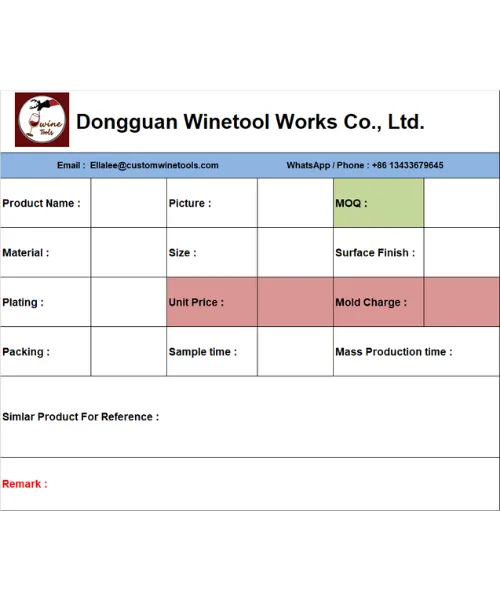
A : Standard options include OPP bags with kraft hang tags, custom rigid gift boxes with EVA foam inserts, and premium magnetic flip boxes. All packaging can be customized with your logo and branding. Design support is included.
Ready to Design Your Custom Wine Pourer?
A custom metal wine pourer with your logo, your finish, and your brand identity — produced at 300-piece MOQ with an 8-day sample timeline — is not a complicated sourcing project. It is a straightforward product development process when you’re working with a manufacturer that has the tooling capability, compliance documentation, and design support to execute it correctly.
If you have a concept, a sketch, or a reference product you’d like to improve on, the next step is simple.
→ Explore the Metal Wine Pourer product page — specifications, material options, and finish examples.
→ Submit your design brief for a free 3D rendering within 48 hours — no commitment required for the design stage.
→ Contact the team directly if you have a specific project brief, a timeline requirement, or a question about compliance documentation.
Building a complete branded wine accessory set? Read our guide on How to Build a Branded Custom Wine Gift Set — covering product selection, plating consistency, packaging tiers, and the one-supplier rule that most buyers only learn after their first mistake.
【Stealth Close】
You already know what you want the product to look like. The question is whether the factory you’re talking to can actually deliver it — the right material, the right compliance paperwork, the right finish, in the right timeline.
That’s what this factory does. Send us what you have — a sketch, a logo, a reference — and we’ll send you a 3D rendering in 48 hours.